
February 01, 2026
Multikulti as a Mantra: Omar Sosa and San Francisco
By Richard Scheinin
This month, staff writer Richard Scheinin speaks to GRAMMY-nominated pianist and composer Omar Sosa about his astounding career and his upcoming week as SFJAZZ Resident Artistic Director.

When asked to describe his music, pianist Omar Sosa explains that he doesn't play bebop. He doesn’t play straight-ahead jazz. He doesn’t play free-jazz or swing. But then he clarifies: “I’m a jazz musician in the philosophic aspect… When you take jazz as a philosophy, you can put every single style of music inside that. And in that way, I’m a jazz musician, creating something out of all these traditions together.”
He draws on the “spirit of jazz,” he adds, defining that spirit as “freedom.”
Born and raised in Cuba, Sosa, who left the island 34 years ago, collaborates with musicians from all over: Italy, Senegal, France, Algeria, India, Venezuela, the United States. He doesn't exactly bridge musical traditions. It’s more like he swims through them, around them. It’s all very organic; his friends joke that he plays “Omar music.” It comes to him, he says: The ancestors inspire and direct his creative output. Sitting down at the piano, dressed in all-white African linens, with a red and black scarf draped around his neck, Sosa lights a votive candle — an offering to the Yoruba orishas of Santeria — and proceeds.
The music can go anywhere. It can be contemplative and transfixing, rippling like water. Or it can turn into a rumba dance party: grooving. Or lightning can strike and suddenly the music turns ferocious — definitely jazz, out of the McCoy Tyner school, with storms of whirling harmonies and rhythm. Sosa is a powerful pianist who studied percussion as a teenager. This percussive element explains the title of a recent documentary about him: Omar Sosa’s 88 Well-Tuned Drums.
When he performs March 5-8 at SFJAZZ, where he is a Resident Artistic Director, Sosa will open his whole toolkit. He feels connected to the Bay Area: from 1995-99, he lived in San Francisco and Oakland. It’s where he found himself as a musician: “All that happened in my life, the beginning was right there.” He played around the clubs — the Elbo Room, Cafe Du Nord — and first performed at SFJAZZ (then known as the San Francisco Jazz Festival) in 1997, beginning a relationship that hasn’t flagged. On June 1, 2021, as COVID receded and the SFJAZZ Center turned its lights back on for the first time in 15 months, Sosa was the first artist to perform in the hall. He calls it a “temple of jazz. You feel everybody is listening to the music with you. You even can hear the people breathe sometimes.”
Last month, I spoke with Sosa for two hours via Zoom.
HHe was in Bari, Italy, visiting his partner and had enjoyed a pasta dish with her at a local restaurant the day before. He waxed about the meal. Sosa loves food. When I last spoke to him, nearly ten years ago, he told me, “You go to Italy, man, and with three ingredients — garlic and pepper and salt — you can make an amazing plate with character, good smells, looking good. The same with music: with three notes, you can create a piece. It’s not too different: Food is art, and music is food for the soul.”
Growing up in Camaguey, Cuba, in the 1960s and ‘70s, Sosa’s introduction to music was through his father’s record collection: Nat King Cole, Count Basie. In music school, he studied only European classical music — it was “a Russian system,” he explains, so listening to American (or even Cuban) music was discouraged. But he and his friends huddled around the radio, pulling in signals from Miami, and heard bands like Earth, Wind & Fire, Chicago, and Toto. They got their hands on albums and tapes by Weather Report, Oscar Peterson, John Coltrane — and Thelonious Monk, still a model for Sosa, who admires the pianist’s singular expression. (In honor of Monk, he named his son Lonious.)
While living in Havana, where he attended conservatory as a teenager, Sosa became a fan of the band Irakere, founded by pianist Chucho Valdés. (He’s another of Sosa’s key influences). Irakere often has been described as a laboratory, mixing jazz, rock, funk, and traditional Cuban dance rhythms. Its performances were eruptive. Looking back, Sosa says, he thinks it was largely through listening to Irakere that he became familiar with Cuba’s folkloric tradition — and with the rhythms that are now second nature to him.
He studied only classical percussion in conservatory — until age 17 when he switched to piano and spent the next two years studying European repertory. Emerging from that background, he somehow threw himself into Havana’s popular music scene and soon won a job as pianist and musical director for Xiomara Laugart, one of Cuba’s leading vocalists. Sosa’s transformation — from Rachmaninoff to cha-cha-cha and, later, jazz — is a bit of a mystery. Outside his classical training, says Scott Price, Sosa’s manager for 30 years, “Omar is almost entirely self-taught on the piano. He’s a self-realized musician.”
Now 60, Sosa has lived in Barcelona, Spain, since 1999. But he’s something of a wanderer in spirit. He feels a connection to Eleguá — the Yoruba orisha, or deity, who guards crossroads, beginnings, and opportunities. When he was a young man, Sosa repeatedly found himself at a crossroads, considering where to pursue his next opportunity. He moved from Camaguey to Havana to Quito and Esmeraldas — a corner of African-rooted culture on Ecuador's northwest coast — to the Spanish island of Majorca and then to San Francisco. One senses that Sosa still considers which path to follow, where to scout new musical opportunities. Like the trumpeter Don Cherry, another of his influences, he’s a globe-trotting gatherer of musical information. Cherry spent years traveling about India, Africa, Scandinavia and Latin America — and settled in San Francisco in the late ‘80s and early ‘90s, just before Sosa’s arrival. Sosa often talks about Cherry who called his music “multikulti”— shorthand for multi-cultural and an apt term for describing Sosa’s art.

Sosa’s multikulti San Francisco residency begins March 5, when he performs with the Stanford Jazz Orchestra — his first-ever big band show in the Bay Area. (They will recreate his 2018 album Es:sensual, recorded with Germany’s NDR Bigband and featuring exquisite arrangements by Brazil’s Jaques Morelenbaum.) On March 6, Sosa leads his AGUAS Trio with Cuban violinist Yilian Cañizares and Venezuelan percussionist Gustavo Ovalles (also streamed live on Fridays Live). Here’s how he describes their music: “It’s about Afro-Cuban color with subtlety, peace and transparency — like water.” (But watch the band on YouTube; its shows can turn into dance parties.)
The March 7 show carries much personal history for Sosa: His Quarteto Americanos includes two of his earliest San Francisco collaborators: saxophonist Sheldon Brown and drummer Josh Jones with whom he first played in 1995. Whenever they get together, he says, “The love is on top of every note.” The residency concludes on March 8 with his SUBA trio featuring percussionist Ovalles and Senegalese kora master and singer Seckou Keita. “The kora is the harp of West African music and its sound is like water,” Sosa explains. “Our first record was called Transparent Water and the second is SUBA which, in the Mandinka language, means `sunrise.’ For me, life is full of beautiful pictures and the idea for this project is to make a contemplative universe through music.”
This conversation has been edited for clarity and length.
Q: You grew up in Cuba. But most of your career has been outside Cuba. You live in Spain. You work with musicians from almost every continent. Is there a connective tissue, an essence, that runs through all your music — a Cuban imprint, or an African imprint?
A: I consider myself an Afro-Cuban musician simply because I was born in Cuba. But the music that comes to me always has some spices that come from Africa. I can do nothing if Africa is not there — the flavor of Africa. And always, it’s my spirit and my ancestors that drive my soul in the process of creation.
I’m working on a new project called ”Sahravane” — kind of combining “Sahara” and “Havana” — with five ladies who play percussion and sing and come from the Saoura Valley in the Sahara Desert in Algeria. A lot of my music touches around the Afro world, the African diaspora, and it enriches my spiritual universe. But of course I also have strong western influences because I play a lot in Europe and in America, and so this western structure is in my music, too. When I’m here in Italy, what I see, what I feel, what I hear — everything has a strong impact on the music I create. And when I go to Africa, everything changes — the food, the sounds on the street. I feel the soul and the spirit of Africa.
So the music I’ve been doing the last 20 or 30 years is a melange, a mix of different continents, a mix of different traditions. My friends say to me, “This is Omar music.” It’s the music that comes to me. I simply need to be open and to translate what comes to me.
Q: You’re saying that everyday experiences find their way into your music. The rhythm of an old wagon moving through the streets may get reflected in your music, or the spices in the food you eat.
A: Exactly. The music is the answer to my day-by-day life. I try to take it in, to enjoy and bring with me every detail of what I see in life every day. This becomes my music. All the information is there before I play one note. All I try to do is put it in line and share it with people.
Yesterday, I went with my girlfriend to a place we like. I had a pasta with shrimp and one — no, two — glasses of wine. And man, the level of joy; it was so beautiful and so powerful. Sometimes one simple thing brings beauty and covers the darkness of what comes before. And all the world’s bad news doesn’t stop this, because we can create good news. This is like the music: It brings me to a place where I can feel full. Through the music, you can find a universe full of peace, full of unity, full of love.

Q: Well, I’ve heard you play very fast — ferociously. But you’re not flashy.
A: For me one of the fundamentals is to try to be honest in what comes to me. I don’t want to impress. I don’t want to be at the top of the mountain.
Q: Let’s talk about your upbringing in Cuba. You grew up in a middle class home in Camaguey. Your parents were not musicians. I’ve read that your mom was a telex operator and your dad was a school administrator. Can you describe the path that led you to become a musician?
A: It’s complex. When I was a kid, my idea was to be in contemporary dance, to be a dancer. But at that time, there was this concept that if you dance, you’re gay and blah blah blah — all this kind of bullshit. Anyway, I told my dad, “Hey dad, I want to be a basketball player.” Because I’m tall, right? And my dad said, “No problem. See if you can qualify.” But I remember the first day on the basketball court: They give me the ball and it hits my face and I come back home all messed up, and I say, “Hey, dad, forget about basketball!”
After this, I have another idea: “Hey dad, what about being a musician?” And my dad says, “Are you sure about that?” (Laughter)
I was listening to music every Sunday in my home, because my dad loved Nat King Cole, Glenn Miller, Count Basie. It was like religion: Every Sunday at 10 am, it’s “Mona Lisa, Mona Lisa…” (He sings Nat Cole’s hit song.) And I fell in love with all this music. And I didn’t just want to listen to it; I wanted to play it. Because the music is so beautiful, so soulful, it touches me a lot. And this is why I start in the marching band in school, when I was in the fourth grade. And it turned out I had some talent. I played the snare drum. And I aimed to be the first drummer of the marching band of the whole school.
Q: Did you actually become the first drummer?
A: Yes. But this was not a music school; it was a primary school.
Q: That’s interesting. Many famous American jazz musicians also started out in marching bands.
A: Here, too! In Europe, lots of horn players — they played in marching bands. Like Paolo Fresu, the great Italian trumpet player; I play with him a lot. That’s how he started.
Q: So when did your serious musical studies begin?
A: This started after primary school when I went to the school of art: Escuela Provincial de Artes de Camaguey. In the beginning, I started with cello. Because, remember, I listen to Nat King Cole all the time with the big orchestra; I love this big sound, with the strings. And for me, the cello has one of the most beautiful sounds. I fell in love with the instrument. But my cello teacher, he says my finger — my pinkie finger — is too small to play properly. I think he was wrong. But he tells me, “Okay, if you want to study music, we can move you to the percussion section.” I said, “Why not?” I already played snare drum in the marching band and I had some talent.
Q: You studied only European classical percussion, is that right? Nothing Afro-Cuban or folkloric?
A: Nope. It’s really interesting. In Cuba at that time, the system is a Russian system and everything was classical. And of course, it was completely prohibited to listen to American music. But still, in my home every Sunday, my dad played his records.
Q: He was breaking the rules.
A: Totally. And I remember Nat King Cole had this record where he sang all in Spanish. And then there was Count Basie and Duke. And me and my friends, we figured out how to listen to some other American music – Elton John, Supertramp.
Q: But when did you start to learn the folkloric music — the traditional music, the traditional rhythms?
A: Okay, like I was saying, we never learned traditional Cuban music in the school. We only learned classical music in the Russian way. And, in a way, I need to say, “Thank you.” Because I discovered Stravinsky and Tchaikovsky — and they got something!
But then, in the primary school in Camaguey, we were mixing with the dance people. And in the dance class, they had the folkloric music — and, remember, in the beginning, my dream was to be a dancer. And I had a good friend in the dance department, so I studied dance outside the music class.
Q: You studied dance informally.
A: Yes. And I was living in the school.
Q: Actually living there?
A: Yes. It was my choice. I stayed the whole week: I go home on Saturday. And Sunday night or very early Monday morning, I come back again to the school.
Q: And you’re studying dance.
A: Yes, and that’s how I started learning some of the traditional music: son montuno, rumba, cha-cha-cha. Just a touch. It was difficult to find a place to really study and learn about that music.
But the popular bands, they started to use these rhythms in their music. And one of my teachers at the art school in Camaguey (Escuela Provincial de Artes) became one of the most prominent composers of dance music in Cuba: Adalberto Alvarez. He later created one of the deepest and strongest groups of traditional Cuban dance music: Conjunto Son 14. That was his band. And it turned out to be the number one band of dance music in Cuba, in parallel with Los Van Van. Actually, Van Van was created before.
But Adallberto was strong and deep in the tradition of son montuno, and he was my teacher and he introduced all of us to this traditional music.
Q: What happened next?
A: I moved to Havana to do the middle grades and I started to listen to more music. That’s when I discovered Los Van Van. I discovered Irakere. I discovered Orquesta Cubana de Musica Moderna. And I discovered the group Opus 13, which was a little bit younger musicians. Chucho Valdés (founder of Irakere) was hiring musicians from Opus 13 to join Irakere.
Mostly, I discovered the traditional Afro-Cuban music through Irakere and I have told Chucho millions of times, “Thank you, daddy. Thank you, father. Because you opened the door for all of us to learn and understand the Cuban tradition.” And the result is what we call Latin jazz. But the structure, the backbone, of Latin jazz is Cuban, Puerto Rican. The backbone is the clave, and where does this come from? Africa.
Q: How old were you when you moved to Havana?
A: Fourteen.
Q: You were on your own at a young age.
A: I was. And in Havana, I was also living in the school. And for my first three years, it was my dream to play percussion in classical music: xylophone, marimba, timpani.
Q: I’ve read that your teacher discouraged you from pursuing a career in classical percussion.
A: Right.
Q: He said your chances of landing the percussion chair with a symphony orchestra were almost nil, because there were barely any positions available. And besides that — I learned this from your manager, Scott Price — the school didn’t have enough vibraphones and marimbas for you to play them regularly. So after all this, when you were 17, you decided to take up the piano. Omar, I think we are lucky that this happened.
A: It worked out okay!

Q: I’m interested in your dance studies and how that informs your music. Even today, when you perform, you’ll often get up from the piano and dance.
A: I’m not a great dancer. But yes, I dance in my shows. I dance when I play. Because dance is really important for your body, for your health, for your emotional system, and for your brain. I recommend everybody to dance. The first thing I tell students is how important it is to dance.
Q: You’re the proof. It pointed you toward the Afro-Cuban tradition.
A: And I tried to discover more and more of my tradition. I have learned that you can discover a tradition — any tradition — through the food, through the dance, and through the music. Most of the time, the music and the dance go together. And then when you add the food – it’s a party! This is every culture. You can go to China, you can go to Africa, you can go to Latin America. Here in Europe, you go to Romania and you see the music is related to the dance and the food and you discover the whole culture in one big party.
"I need to say “thank you” to San Francisco because San Francisco discovered in me what I was looking for all my life."
Q: What happened when you moved to San Francisco? That was in 1995, just before you turned 30.
A: It’s where I started my career. All that happened in my life, the beginning was right there.
When I moved to San Francisco, the first place I lived was in the Mission District. I thought to myself, “Am I in America? Or am I in Mexico? In Latin America?” Because in 1995, the Mission District was basically Spanish-speaking. So all the places I’d go and play — Elbo Room, Cafe du Nord, Pier 23, the Fillmore a couple of times — the people were dancing salsa. And this is one of the reasons I started playing dance music. Because when I was in Cuba, I wasn’t really doing that.
But when I played in San Francisco, every place was a dance party! And when I see the people dancing, I thought, “That’s the city.”
Q: Name a couple of musicians you played with early on.
A: The first real Latin gig I played was with (percussionist) John Santos. And when I met John, I said, “This is the music I want to do.” And when I met (saxophonist) Peter Apfelbaum (leading his Hieroglyphic Ensemble), I listened to that music and thought “that is the concept of the music I want to play.”
I need to say “thank you” to San Francisco because San Francisco discovered in me what I was looking for all my life. In San Francisco, I started to create the music and translate the music in the way I like it. San Francisco was basically the right signature for my soul.

Q: You mention John Santos who grew up in the Mission District. In your documentary, there’s mid-’90s footage of you and John performing as a duo at the Elbo Room. John is playing the shekere. When I streamed the film the other day (it's on Amazon and other platforms), I could feel the connection between the two of you.
A: This was the first time in my life that I play this concept of music, and I enjoyed it so much and I’ve been doing it to this day – just two elements, just percussion and piano. I’ve done this with John, with Trilok Gurtu, with Mino Cinelu, and with Gustavo Ovalles (who will play in two of the shows at SFJAZZ). I’ve been playing with Gustavo for more than 25 years; the connection that we have is beyond rhythm. The rhythm just expresses our spirituality. Actually, if we go back to the beginning of this conversation — remember, I’m a percussion player. So my connection with a percussion player like John or Gustavo or any of these other guys — it’s normal because I play percussion. I play percussion with the piano, and this is why the movie is called 88 Well-Tuned Drums.
Q: I thought we could finish by talking about your Quarteto Americanos which performs March 7 at SFJAZZ. This group with (saxophonist) Sheldon Brown and (drummer) Josh Jones has a lot of history. You’ve got a different bass player these days (Ernesto Mazar Kindelán, originally from Cuba and now living in San Leandro). But the band has special meaning for you.
A: I’m so proud to play with this group, man. When I arrived in San Francisco in 1995, this was kind of like my first band.
Q: Describe the connection you feel with the band members.
A: Oh man, we don’t need to talk! No matter if we don’t play for a long time, the level of respect and unity we have is something that’s so important to me. You can say we play good or we play bad, but always the love is on top of every note. And after the show, when we sit down to eat a meal, we are all in the same spiritual dimension. It’s peace, spirituality, silence. It’s more than music, man. It’s a family. This is a band that I love.
Omar Sosa's week as SFJAZZ Resident Artistic Director runs 3/5-8. Tickets and more information are available here. The 3/6 show featuring the Aguas Trio will be streamed live on Fridays Live.
A staff writer at SFJAZZ, Richard Scheinin is a lifelong journalist. He was the San Jose Mercury News' classical music and jazz critic for more than a decade and has profiled scores of public figures, from Ike Turner to Tony La Russa and the Dalai Lama.
Related Articles
February 02, 2026
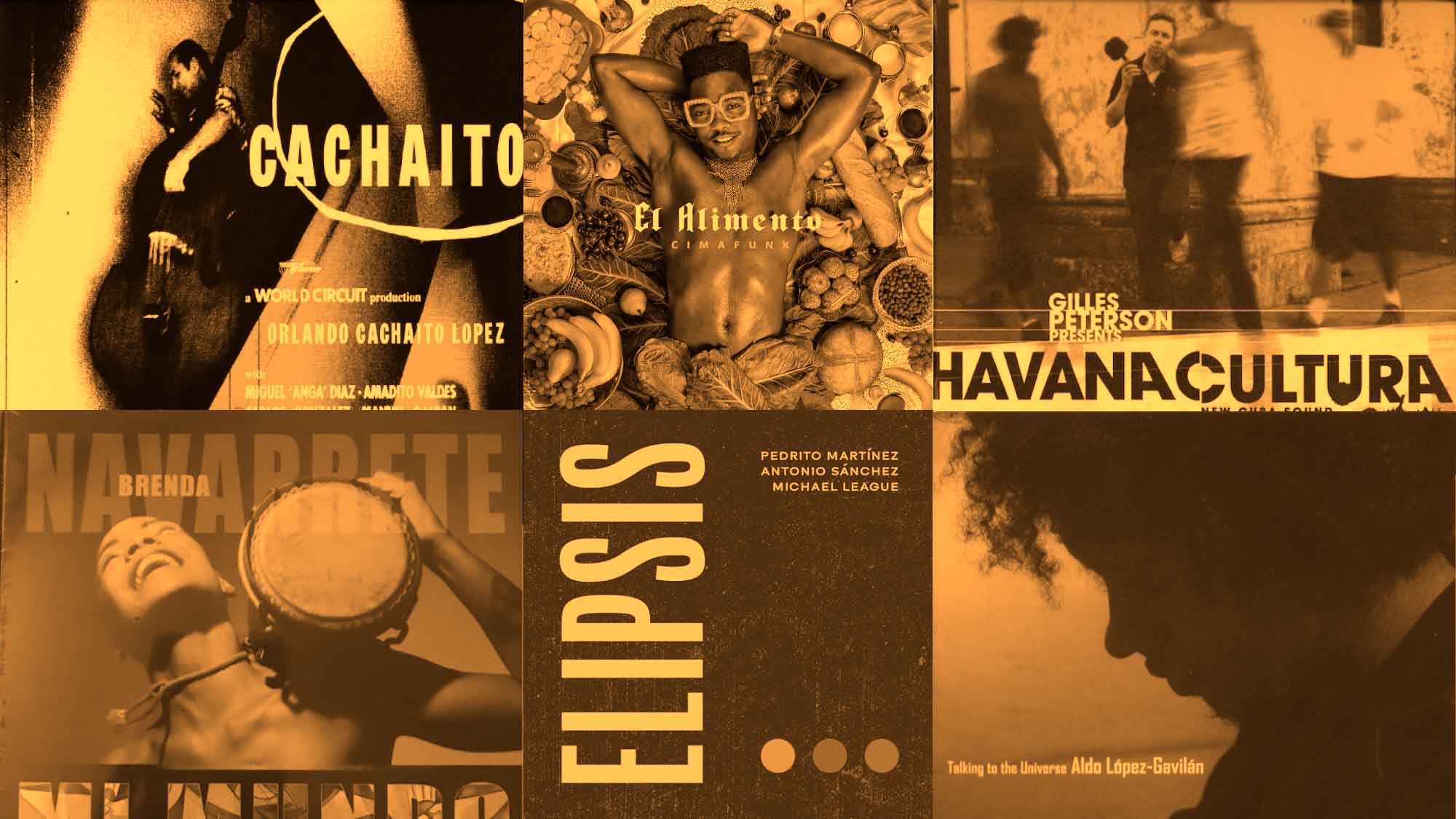
Playlist: The Electric Side of Cubacurated by SFJAZZ Staff
A high‑voltage journey with Cuba’s boldest innovators, spotlighting artists like Irakere, Cimafunk, Brenda Navarrete, Omar Sosa, Elipsis, and more as they fuse ancestral rhythms with electronic, genre‑bending sound.
- Tags:
- Playlist
- Listen
June 01, 2026
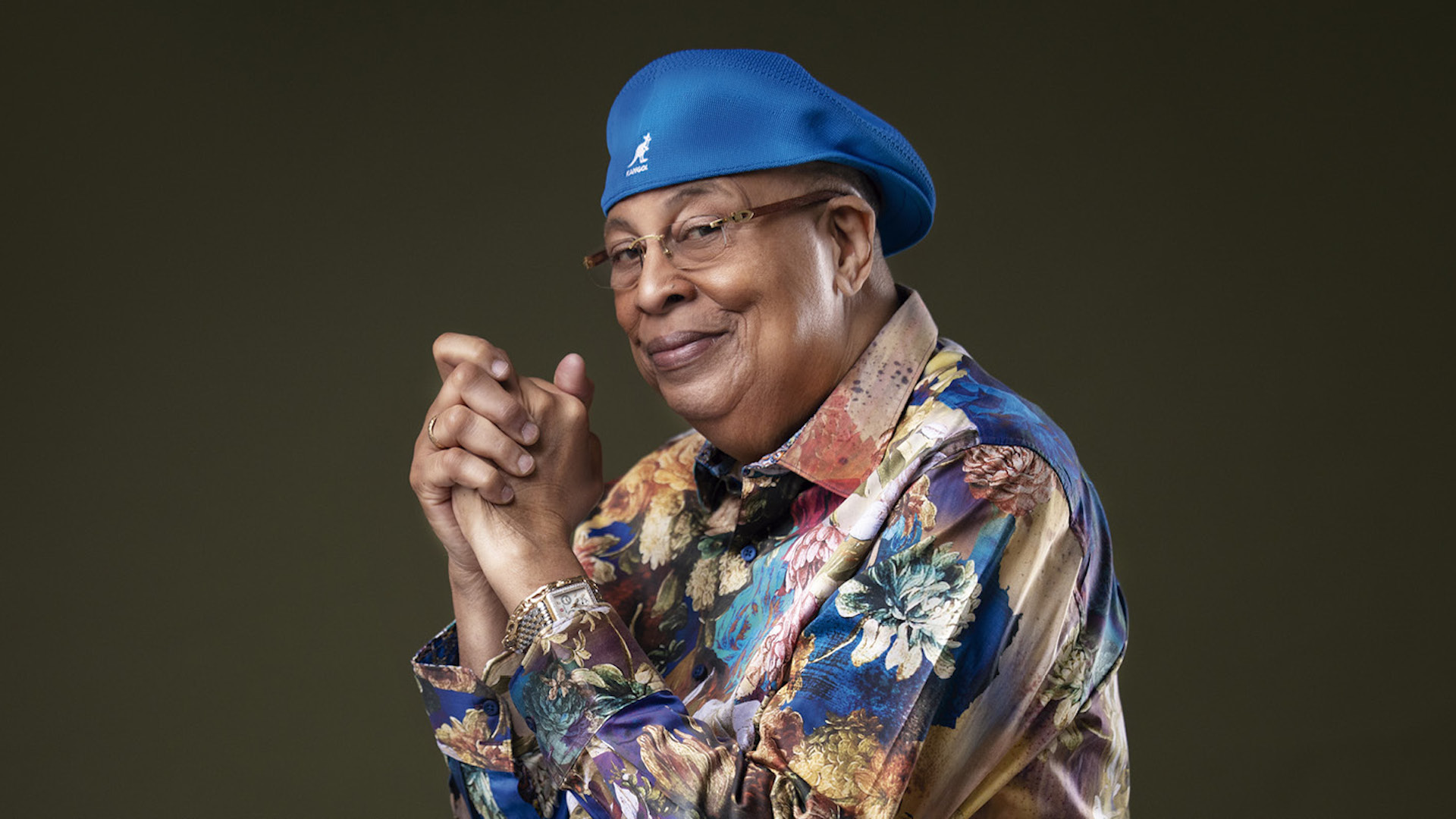
Chucho Valdés Celebrates a Five Decade Musical RevolutionBy Rebeca Mauleón
Looking forward to the return of Chucho Valdés and his Royal Quartet 6/11-14, we revisit SFJAZZ Director of Education Rebeca Mauleón's deep dive into the life and work of the Cuban piano maestro and his groundbreaking band Irakere.
January 02, 2026
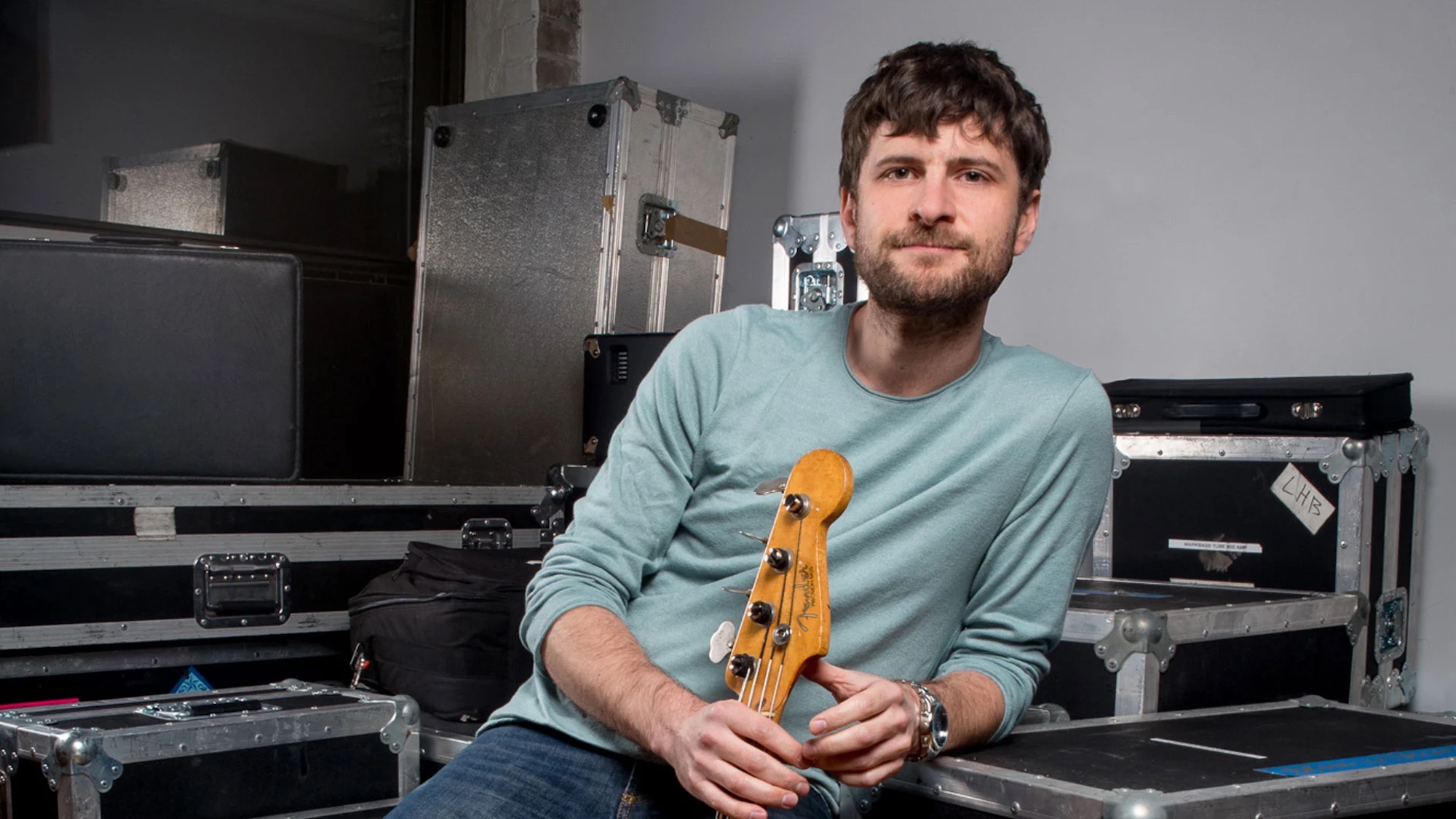
Michael League: Spain, Sake, & Following His Muse Down the Rabbit HoleBy Richard Scheinin
Snarky Puppy mastermind Michael League begins his week as Resident Artistic Director at the end of January. Richard Scheinin spoke to the bassist, composer, and multi-instrumentalist about his residency and career.
November 02, 2018
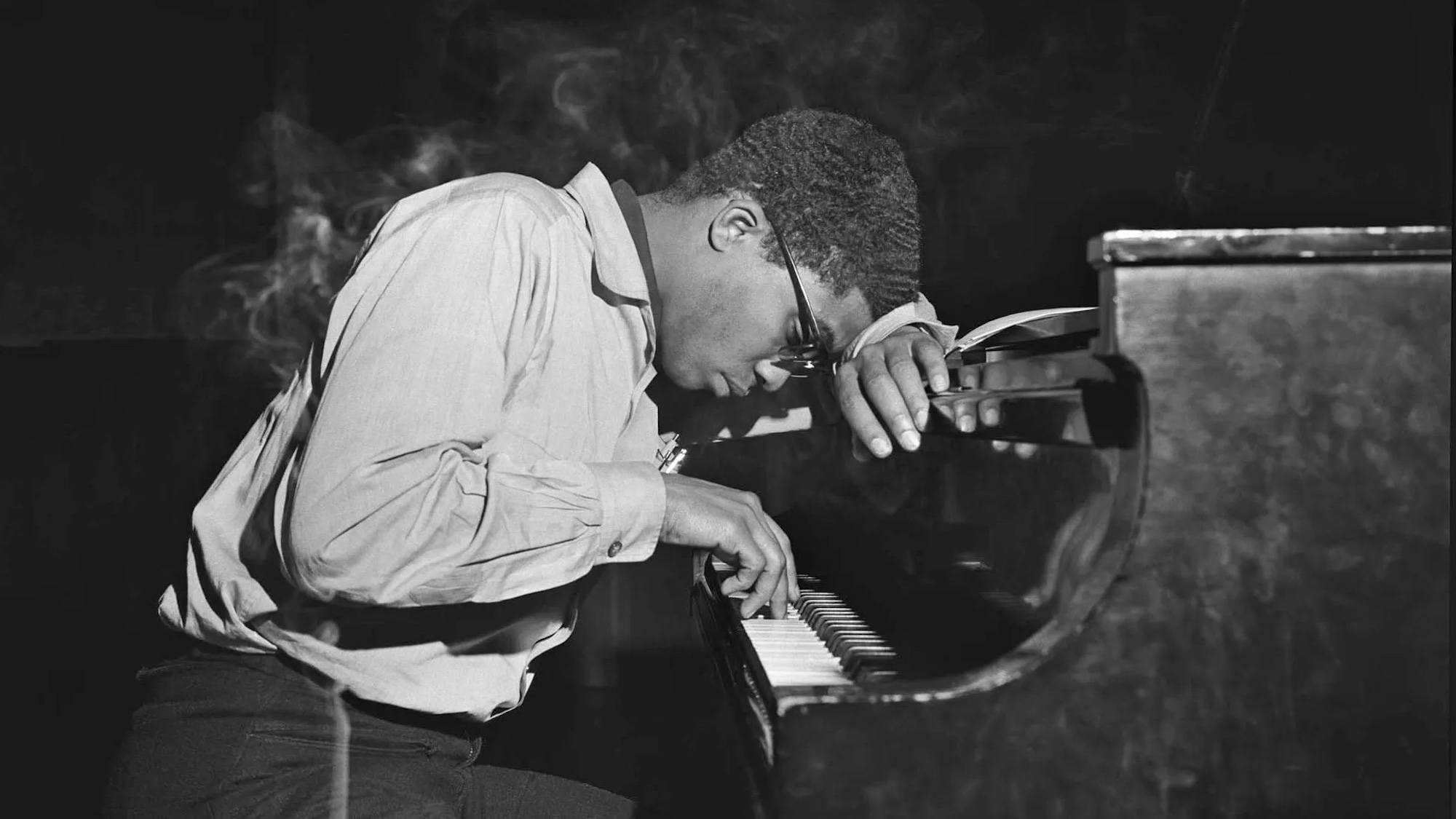
15 Jazz Piano Albums You Should HearBy Rebeca Mauleón
In keeping with our theme of quintessential jazz albums, we present this sampling of some of the music’s iconic piano masters in an array of formats - from solo piano to intimate duos, trios and larger ensembles.
Sign Up for the SFJAZZ newsletter!
Get the latest on upcoming concerts, the monthly online SFJAZZ Magazine, new videos, playlists and more!